
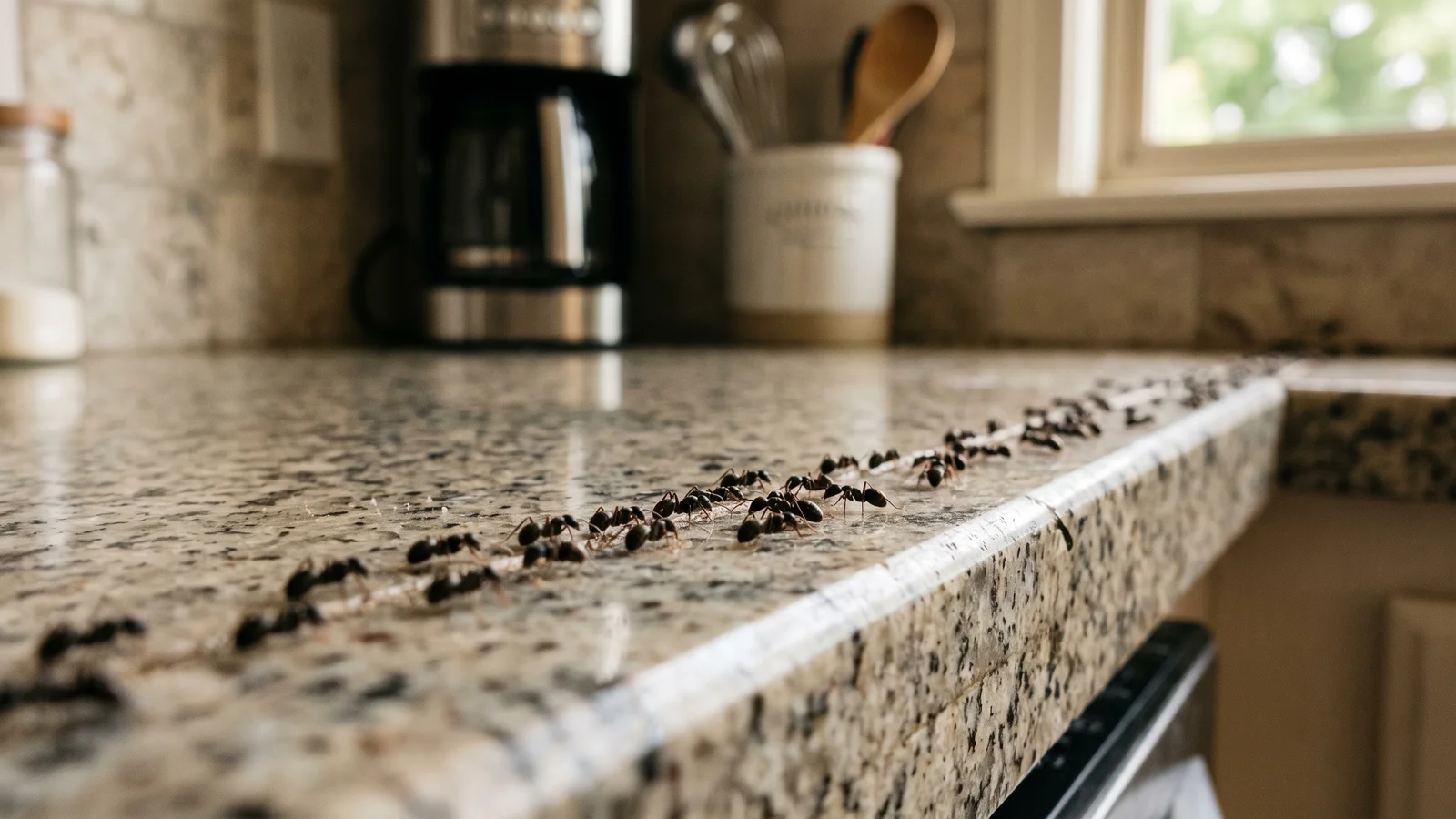
Odorous House Ants
Tiny and dark, they give off a rotten coconut smell when crushed.
Pest ID Guide
Ants on the counter are the most common pest in Oklahoma. This guide helps you tell the species apart by size, color, and behavior, so you know if you have a nuisance ant or a wood-damaging one.
If you found a line of tiny insects marching across your floor, you almost certainly have ants. This guide is for Oklahoma City homeowners who want to know which kind, since the species decides whether you face a simple nuisance or a real threat to your home.
All ants share three body parts, a pinched waist, and bent, elbowed antennae. That last detail matters, because it separates ants from termite swarmers, which have straight antennae and a thick waist. The differences among ant species are smaller but still useful.
The right ID guides the fix. Sweet-loving house ants respond to different bait than protein-seeking ants, and carpenter ants call for a very different plan than a kitchen trail.
The most common ants in Central Oklahoma and how to tell them apart.
Tiny and dark, they give off a rotten coconut smell when crushed.
Dark brown ants that nest under driveways and leave small dirt piles.
Large black ants, up to half an inch, that tunnel through wood.
Reddish ants that build dome mounds and sting when disturbed.
Small ants that raise a heart-shaped abdomen over their backs.
Light to dark brown ants that form huge, connected supercolonies.
Ants leave clues even when you do not see a trail.
Lines of ants along baseboards, counters, or window sills.
Fine soil near cracks, slabs, or driveway joints marks a nest.
Sawdust-like piles below wood point to carpenter ants.
Swarmers inside often mean a colony is nesting in the home.
Dome mounds in the lawn usually mean fire ants.
Ants in sealed food areas signal an established indoor trail.
Note if the ant is tiny, medium, or large and dark.
See if it bites, smells, or raises its abdomen.
Follow the trail to a wall, slab, or yard mound.
Compare to the species above, then plan the fix.
Most Oklahoma ants are a nuisance, not a danger. Odorous house ants and pavement ants invade kitchens for food and water but harm nothing but your patience. The catch is that spraying the trail can split the colony and make the problem worse.
Carpenter ants are different. They do not eat wood, but they hollow it out to nest, and over years that weakens beams and framing. Large black ants indoors, especially with sawdust piles, deserve a fast, professional look.
Fire ants bring their own risk. Their mounds fill yards across the metro, and their stings hurt and can be dangerous to allergic people and pets. Knowing which ant you have keeps a small issue from becoming a costly one.
Could not have had a better experience. They explained the plan, came out fast, and I saw results the first week. Highly recommend Armory.
He identified the ants right away and the trail was gone within days. No pressure, just honest help. Highly recommend.
Very knowledgeable. I have him handle pest issues at all of my houses. Quick to respond and gets it done right. Highly recommend.
Get a free inspection from a veteran-owned team. We confirm the species, locate the nest, and target the colony at its source across the Oklahoma City metro.